Development history of hearing aids
Hearing aids are important auditory aids that help people with hearing impairments reintegrate into society and enjoy wonderful sounds and rich environmental sounds. The origin of hearing aids can be traced back to the 17th century. After centuries of changes and innovations, hearing aids have evolved from mechanical devices to electronic devices and then to digital devices. Technological advancements have made hearing aids smaller and more in line with human needs, resulting in improved performance and a better user experience.
Conventional hearing aids generally require a professional doctor to test the patient's hearing impairment, and then configure them professionally based on the test results to provide better hearing compensation to the patient. Until 2021, the United States approved self fitting hearing aids that can be sold and used directly to consumers without the assistance of hearing professionals, bringing about a significant change in the convenience and experience of hearing aid use. Users no longer need to go to the hospital or seek professional audiology experts. They can purchase a hearing aid and use the accompanying app to test their hearing loss and configure suitable hearing aids to compensate for hearing loss.
※ Classification of hearing aids in the United States
The United States has divided hearing aids into 19 product codes and 9 regulation numbers, of which 7 codes require 510 (k) registration, while other hearing aids are exempt from 510 (k) registration. For a more detailed description of the types of hearing aids, please refer to our other article titled "Hearing Aids and Personal Sound Reinforcement Products: Notes"( https://mp.weixin.qq.com/s/BMpr5vNnc6cVNoVHs_HFDA ). With the advancement of technology and the emergence of self fitting hearing aids, in 2022, the US Food and Drug Administration added the product code "QUH" for over-the-counter self fitting hearing aids on the basis of the original product code "QDD", distinguishing prescription and over-the-counter self fitting hearing aids.
※ Registration process
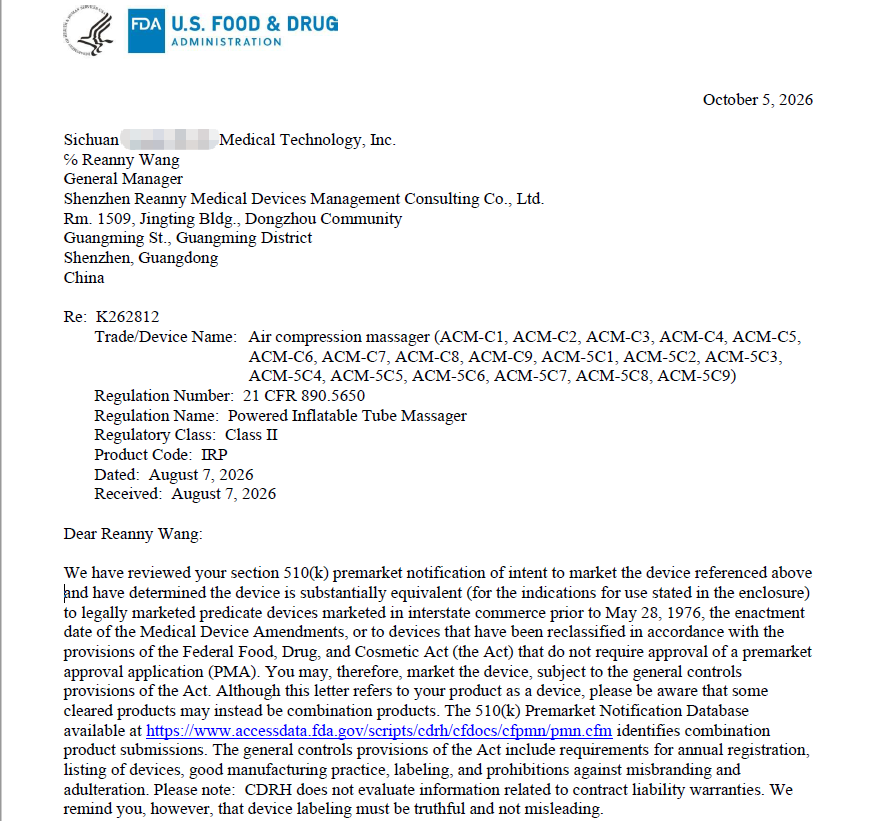
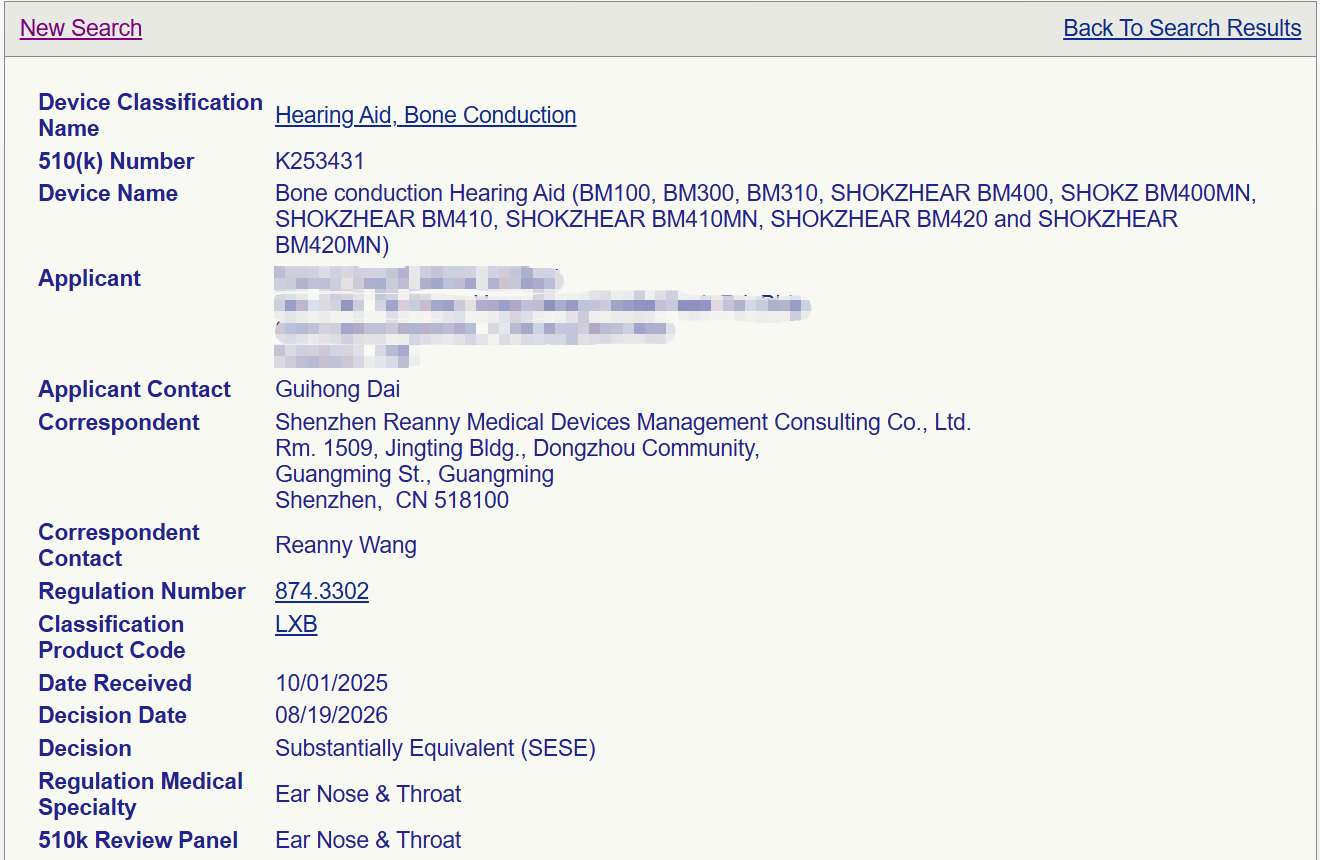
In this self fitting hearing aid application, we went through the transition of product code from "QDD" to "QUH". The process from submitting no clinical trials and usability validation to issuing additional clinical trials and usability validation. After receiving the FDA's request for clinical trials and usability, I started preparing the clinical trial and usability validation plan, and submitted Q-Sub to discuss the feasibility of the plan with the FDA. After unremitting efforts and communication, we finally determined the clinical trial and usability plan.
The clinical trial was conducted by Ruieni Group's Zhuyitong Company in two hospitals within China; SMO was completed by Borussia of Ruini Group; The usability study was planned, statistically analyzed, and summarized by Ruini Consulting, and the 510 (k) registration process from submission to submission was completed by Ruini Consulting. Thanks to the active efforts of Ruini and the client, the submission of the supplementary documents was finally completed before the deadline for submission.
It took more than 5 months from submission to certification, and finally completed registration at the end of September, becoming a Chinese [sensitive word] OTC self fitting hearing aid approved by the US FDA.
Experience sharing
As the service provider in China who obtained this case, Ruini would like to share its experience in OTC self fitting hearing aid registration.
1. Non prescription hearing aids can be used by non professionals, who can directly purchase, use, or operate them, thus requiring higher safety requirements than prescription hearing aids. Among them, the maximum output limit for loud sound should not exceed 117dB at any frequency; the material of the earplug must be undamaged and the depth of the sensitive word must be kept at least 10mm away from the eardrum.
2. When measuring the electroacoustic performance of an acoustic coupler, a 2cm3 acoustic coupler should be selected. Only when the 2cm3 acoustic coupler is incompatible with the hearing aid, other scientifically effective and technically equivalent acoustic couplers should be considered, and the basic principles of using alternative acoustic couplers must be recorded.
3. Usability verification should include all expected usage environments, characteristics of the user population, and the proportion of experienced personnel. The subjects should perform the test under adverse conditions and collect any usage error information or data such as decision-making errors, operational errors, interpretation errors, etc., and conduct a summary analysis to confirm whether these errors affect the safety and effectiveness of the product.
4. The FDA may accept clinical trials conducted outside the United States, but it is necessary to ensure that the clinical data is sufficient, truthful, ethical, and scientifically effective. This clinical trial is a randomized, crossover, single blind, non inferiority multicenter clinical trial. The experiment is divided into two stages: laboratory stage and on-site cross wearing stage, and effectiveness (including primary and secondary indicators) and safety analysis are conducted for each stage.
※ Conclusion
The approval of 510K OTC self fitting hearing aids is a credit and honor that belongs to the customer, colleagues from Ruini Group, clinical researchers, and statistical experts. It is the result of the joint efforts of all personnel working together!!!