Reanny Medical Devices Management Consulting Co., Ltd.
Focused · dedicated · professional
Head Office
0755-27391220
Guangzhou Company
020-82513196

Focused · dedicated · professional
Head Office
0755-27391220
Guangzhou Company
020-82513196
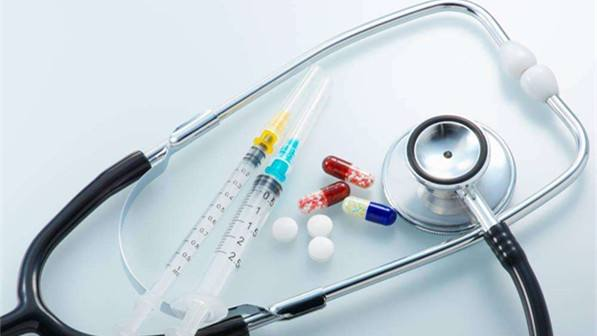
In the medical device industry, the registration and approval process before product launch is a key link related to the development of enterprises. However, complex regulatory systems, cumbersome declaration processes, and strict review standards often result in significant time and labor costs for businesses. Choosing a professional medical device registration agency service can not only greatly improve registration efficiency, but also enable enterprises to focus on core business and achieve the goal of "efficient and worry free" listing.Why choose to register for proxy services?Proficient in regulations and risk avoidanceThe agency has a senior regulatory team, familiar with domestic and international medical device regulatory trends (such as China NMPA, US FDA, EU CE, etc.), able to accurately interpret the latest policies, avoid common problems such as incomplete information and non-compliance with standards in advance, and avoid approval delays caused by repeated modifications.Process optimization, speeding up approvalFrom product classification, testing plan to clinical evaluation, the agency efficiently coordinates testing agencies, hospitals, and regulatory departments through standardized process management, shortening the data preparation cycle. For example, the registration time for Class III medical devices can be optimized by 30% -50%.Resource integration to reduce costsLong term cooperation between agencies and testing laboratories, clinical bases, etc. can quickly match resources and avoid trial and error costs for enterprises to connect on their own. At the same time, the professional team has a high one-time pass rate, reducing the additional costs incurred by duplicate declarations.Our service advantagesFull process hosting: providing a "one-stop" service from registration information writing, application tracking to sending and responding, enterprises only need to provide basic technical information, and the remaining work is fully controlled by an expert team.Customized solution: Develop differentiation strategies based on product characteristics (such as IVD, implantable devices, etc.) and registration regions, such as prioritizing innovation channels or international multi center clinical data mutual recognition.Risk Warning: Real time synchronized review progress, anticipating potential issues and providing solutions to ensure transparent and controllable registration process.Case WitnessThe AI assisted diagnostic software developed by a start-up company can quickly complete classification and definition (clearly classified as Class II devices) through proxy services, obtain registration certificates within 3 months, saving 4 months compared to similar companies' self declaration, and helping the product seize market opportunities.Choosing a professional agent means choosing competitiveness. We take compliance as the foundation and efficiency as the core, making the road to market for medical devices time-saving and effortless, and helping you focus on innovation and market development.
481In the medical device industry, the implementation of the EU Medical Device Regulation (MDR) has brought new compliance challenges to enterprises. Our professional MDR certification consulting service team will assist you throughout the certification process and achieve efficient coordination with the notified body.Our professional services include:Comprehensive gap analysis: Conduct a comprehensive evaluation of your existing quality management system and product technical documents to identify gaps with MDR requirements.Technical document optimization: Assist in improving key documents such as clinical evaluation reports and risk management files in accordance with MDR Annex II and III.Quality Management System Upgrade: Help you establish a quality management system that meets the requirements of MDR Article 10 (9).Announcement Body Connection: As a bridge between you and the announcement body, ensure smooth communication and improve the approval rate.Continuous compliance support: After certification, we will continue to provide ongoing regulatory updates and compliance maintenance services.Why choose us?The team is composed of former announcement agency auditors and senior regulatory experts100% successful record of assisting clients through MDR certificationCustomized service solutions, providing precise support for different product categoriesSignificantly shorten the certification cycle, saving an average of 30% of time and costLet us help you smoothly overcome MDR compliance barriers and quickly enter the EU market. Contact us immediately for free preliminary consultation and pricing solutions.
4211、 Service OverviewTo assist medical device companies in efficiently responding to changes in industry regulations and improving their quality management level, our company has launched standardized training services that cover the entire process of regulatory interpretation, technical practice, and risk management, ensuring that enterprise teams quickly grasp core knowledge and reduce compliance risks.2、 Service ContentIn depth analysis of regulatory systemComparison of Domestic and Foreign Regulations (China NMPA, EU MDR, US FDA)Application Guide for the Latest Regulations on the Supervision and Administration of Medical DevicesGuidelines for Writing Registration Application Materials (including Template Cases)Practical training on production quality managementImplementation of ISO 13485:2016 clausesKey points for environmental control of sterile medical devicesProcess validation and equipment calibration practical exercisesRisk Management Special CourseISO 14971 Risk Management Full Process SimulationAdverse event monitoring and recall case reviewPrediction and Response Strategies for Common Issues in Flight Inspection3、 Service advantagesAuthoritative faculty: Former review experts+20 years of experience, dual mentorship system for corporate executivesScenario based teaching: sand table simulation using real cases of FDA warning lettersEffect guarantee: Free Q&A for 3 months after training, accompanied by an online question bank to consolidate learning4、 Implementation processRequirement diagnosis (questionnaire+interview) → 2 Customized course plan → 3 Segmented training (theory+workshop) → 4 Effect evaluation (written test+practical assessment)5、 Value added servicesGift the latest regulatory compilation electronic manualPriority participation in industry summit quotas20% discount on annual retrainingThis plan can be flexibly adjusted according to the scale of the enterprise, supporting a mixed mode of online and offline, and helping enterprises build a compliant and efficient medical device professional team.
477In today's booming global healthcare industry, product registration is an essential key step for medical device companies to expand into international markets. The overseas registration service for medical devices is becoming an important bridge connecting Chinese manufacturing with global medical demand, opening the door to the global market for enterprises.The complexity and necessity of international registrationThe international registration of medical devices is much more complex than domestic registration, involving multiple dimensions such as technical document preparation, quality management system audit, and clinical data evaluation. Regulatory agencies in various countries, such as the US FDA, EU CE, and Japan PMDA, have their own strict technical requirements and approval processes. Professional registration services can help businesses:System interpretation of target market regulatory requirementsAvoiding common errors and vulnerabilities in technical documentsSignificantly shorten the registration approval cycleReduce compliance risks and costsCore service contentProfessional overseas registration services for medical devices typically cover the following key aspects:Regulatory consultation and strategic planning: Develop the optimal registration path based on product characteristicsTechnical document preparation and review: Ensure compliance with international standards such as ISO 13485Local representative service: resolving issues related to overseas legal entity requirementsClinical evaluation support: including PMS and PMCF plan developmentPost listing supervision: maintain the validity of the registration certificate and handle change notificationsOverview of Regional Market CharacteristicsThere are significant differences in the registration of medical devices in different regions:EU market: Implementing new MDR regulations, stricter classification rules, emphasizing clinical evidenceUS market: FDA 510 (k) or PMA pathway, emphasizing the principle of substantive equivalenceSoutheast Asian market: Most countries recognize some international certifications, but local testing is requiredLatin American market: Long registration cycle, some countries require local agents to conduct on-site verificationConsiderations for choosing a service providerWhen choosing a registration service partner, enterprises should focus on evaluating:Successful cases and localized resources in the target marketDepth of professional knowledge in segmented product fieldsPractical ability to deal with unexpected registration issuesIntegrity and response speed of service systemTransparency and rationality of cost controlFuture Trends and SuggestionsWith the convergence of global medical device regulation, registration services are showing the following trends:ESSubmission has become the mainstream method for digital registrationReal world data (RWD) increases weight in clinical evaluationMulti country joint approval mechanism gradually promotedFor medical device companies planning to go global, it is recommended to:Plan international registration strategy 2-3 years in advanceEstablish a dedicated international registration teamParticipate in activities organized by international organizations such as IMDRF to stay informed about the latest developmentsConsider enhancing system recognition through international certifications such as MDSAPProfessional foreign registration services can not only help companies enter their target markets in compliance, but also maximize the global value of their products through scientific registration strategies. They are an indispensable partner for Chinese medical devices to go global.
493In the field of medical devices, FDA 510 (k) certification is seen as the key to unlocking the global high-end market. This certification not only represents that the product meets the strict standards of the US Food and Drug Administration (FDA), but also serves as an authoritative endorsement of the company's technical strength and market reputation. Its high gold content is mainly reflected in the following three dimensions:1、 Technical barriers: rigorous scientific review system510 (k) certification requires that devices must achieve "substantial equivalence" with predicate devices already on the market, which means that companies need to submit dozens of technical documents including biocompatibility testing, electromagnetic compatibility verification, and more. According to statistics, only about 65% of initial applications will pass the review in 2022, with a technical threshold far exceeding the certification standards of most countries.2、 Market premium: Leveraging billions of commercial valueCertified devices can directly access the US market, the world's largest medical consumer country (accounting for 40% of global medical expenditures). The data shows that the average premium space for products with 510 (k) certification is 30-50%. For example, after certification of orthopedic implant products, the terminal selling price can be increased to 2-3 times that of unverified similar products.3、 Brand Value Added: The 'Credit Currency' of the Supply ChainThe certification mark has become a hard currency for cross-border procurement. Large purchasers such as Wal Mart medical supply chain explicitly require suppliers to hold 510 (k), and EU CE certified enterprises often use 510 (k) as a springboard for technology upgrading. More importantly, this certification can significantly reduce product liability insurance premiums (with an average reduction of 25%), directly optimizing the company's cost structure.It is worth noting that in recent years, the FDA has implemented the reform of "eCopy" electronic submission and "Third Party Review" third-party review, and the certification cycle has been compressed from the traditional 18-24 months to 8-12 months. This combination of "strict standards+high efficiency" further strengthens the position of 510 (k) as an industry benchmark. For medical companies aspiring to expand globally, breaking the 510 (k) certification has become a necessary path for them to transition from regional brands to international players.
493The medical device registration certificate number is an important identifier for identifying the category of medical devices, and correctly distinguishing between Class II and Class III medical devices is crucial for medical practitioners and related enterprises. Below, I will provide a detailed explanation on how to identify the category of medical devices based on their registration certificate number.Basic structure of medical device registration certificate numberThe registration certificate number for medical devices in China usually consists of the following parts:Abbreviation of the location of the registration and approval department: for example, "Guo" represents the approval of the National Medical Products Administration, while "Beijing", "Shanghai" and other names represent the approval of provincial-level drug regulatory departmentsRegistration form: "Equipment" represents medical devicesRegistration category: The numbers "1", "2", or "3" respectively represent Class I, Class II, and Class III medical devicesProduct classification code: composed of letters and numbersRegistration year: 4 digitsSerial number: usually 4 digitsHow to identify Class II and Class III medical devicesThe key point lies in the third part of the registration certificate number:Class II medical devices: The registration certificate number contains the words "approved" or "entered", and the third digit is "2". For example, "2" in "National Medical Device Approval 2015324 *****" indicates that this is a Class II medical device.Three types of medical devices: The registration certificate number contains the words "approved" or "entered", and the third digit is "3". For example, the "3" in "National Medical Device Approval 2018312 *****" indicates that this is a Class III medical device.Other identification methodsRisk level: Class III medical devices have the highest risk level, followed by Class II. The three types are usually devices implanted in the human body, used to support and maintain life, or potentially dangerous to the human body.Approval authority: Class III medical devices are approved by the National Medical Products Administration, while Class II devices are approved by provincial drug regulatory departments.Product catalog: You can refer to the "Classification Catalog of Medical Devices" released by the National Medical Products Administration, which clearly lists the classification of various types of medical devices.PrecautionsThe classification of medical devices may change with technological development and regulatory requirements. It is recommended to regularly review the latest version of the "Classification Catalogue of Medical Devices"The registration certificate number for imported medical devices also follows similar rules, but will include the word "in" symbolIf you have any questions, you can log in to the official website of the National Medical Products Administration to inquire or consult professional institutionsCorrectly identifying the category of medical devices is crucial for procurement, use, and regulation, and medical practitioners should master this basic skill.
628Head Office
Headquarters Address:Room 1509, Jingting Building, Dongzhou Community,
Guangming Street, Guangming District, Shenzhen
Phone:+86-0755-27391220
Guangzhou Company
Address:Room 506, No.3-bis, Houwangmiao Street, Shigang Road, Haizhu District, Guangzhou
Phone:+86-020-82513196
Mobile Phone:+8618127257501(WeChat Account)


Phone
0755-27391220
020-82513196
WeChat customer service
Mini Program
reanny@reanny.com