Welcome to the official website of Reanny Group!

Reanny Medical Devices Management Consulting Co., Ltd.

Focused · dedicated · professional

Head Office

0755-27391220

Guangzhou Company

020-82513196

Service Content
MDSAP certification

MDSAP certification

2025-11-13

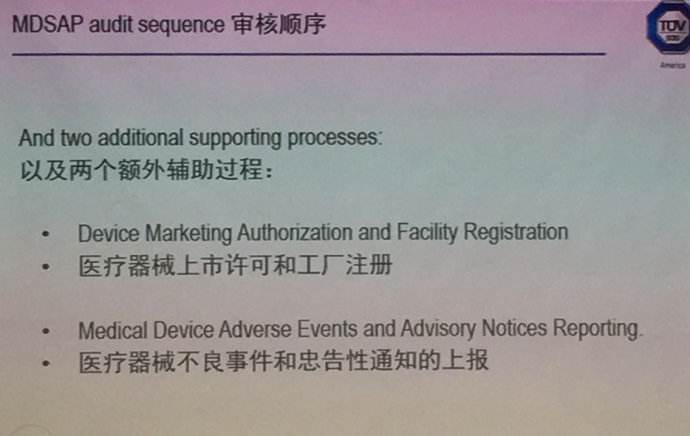
The MDSAP certification program aims to establish a single audit process that meets and unifies the audit requirements of the aforementioned countries, making the audit more comprehensive and effective. The regulatory agencies of the five countries above recognize the audit results of MDSAP, and production enterprises can reduce the number of audits corresponding to different regulatory agencies, thereby reducing production interference caused by audits. The introduction of MDSAP certification has standardized the audit process internationally and reduced the burden on production enterprises.The Medical Device Single Audit Program (MDSAP) project is a new set of audit procedures recognized and joined by regulatory agencies in the United States (FDA), Australia (TGA), Brazil (ANVISA), Canada (HC), and Japan (MHLW). The program aims to establish a single audit process, meet and unify the audit requirements of the aforementioned countries, and make the audit more comprehensive and effective. Regulatory agencies in these five countries recognize the audit results of MDSAP, and production enterprises can reduce the number of audits corresponding to different regulatory agencies, reducing production interference caused by audits. The introduction of MDSAP standardizes the audit process internationally, reducing the burden on production enterprises. Through the continuous participation of production enterprises, the MDSAP certification project will gradually improve and is expected to be officially launched in 2017.Chinese medical device exports to the United States require FDA review, approximately every two years. Chinese medical devices account for less than 10% of the import share of medical devices in the United States. However, the number of Chinese audits accounts for more than 13% of the FDA's global non US audits, indicating the increasing focus of the FDA on Chinese companies; The number of audits conducted by the FDA on Chinese factories is increasing at a rate of 50% annually, and the proportion of companies with the FDA's audit conclusion of "zero defects" is only 18% to 28%, far lower than the international average of 47%.Renni MDSAP certificationRenni has 16 years of experience in the medical device industry, serving as a consultant for medical device regulations and systemsRenni is proficient in CFDA, FDA, and CE regulations for medical devicesRenni is proficient in ISO13485/YYT 0287, ISO14971/YYT 0316, QSR820, JGMP, GMP quality system, etcRenni excels in providing guidance on medical devices for the US FDA QSR820 and is proficient in meeting the requirements of various challenging subsystems of QSR820Renni has successful experience and cases in consulting and coaching dozens of medical device companies, helping them successfully pass the FDA QSR820 audit in the United States, and some companies have obtained zero defect approval; And assist enterprises in obtaining ISO13485 certificates, CE certificates, CMDCAS certificates, etc.A professional team with extensive experience in US regulations can provide timely and efficient services. At present, we are one of the consulting institutions in China that has successfully provided guidance on FDA warning letter lifting and blacklist removal

Learn More +

FDA factory inspection

FDA factory inspection

2025-11-13

FDA Cosmetic Factory Inspection ResponseMethod/Steps:The gap between the existing quality management system and regulatory requirementsThe overall design of the consulting process, including on-site rectification, documentation system, and application rectification;Collect existing document materials: quality manual, procedure documents, work instructions, process documents, inspection procedures, records, etcBased on FDA factory inspection requirements, document review, inspection of GMP throughout the production process, and maintenance of GMP content for equipment and facilities, consultants and relevant personnel of the enterprise work together to carry out file system modifications;Assist enterprises in identifying and rectifying deficiencies in their workshops and warehouses;Provide training on auditing skills for enterprise personnel;Check the effectiveness of the system and arrange for our company's reviewers to conduct a simulated audit before the FDA comes for review;Accompanying FDA factory inspections;Assist enterprises in rectifying non conformitiesFood companies exporting to the United States may be subject to factory inspections by the US FDA after undergoing corporate registration. The factory inspection will be conducted by American reviewers, with a focus on on-site GMP, SSOP, and HACCP plans, as well as batch records. If the review fails or you do not accept the review, it will result in you losing the US market.Provide FDA factory inspection guidance, audit accompaniment, and translation services.Professional services for responding to FDA spot checks, factory audits, improvements, and accompanying audits:The gap between the existing quality management system and regulatory requirementsThe overall design of the consulting process, including on-site rectification, documentation system, and application rectification;Based on FDA audit requirements, document review, inspection of GMP throughout the production process, and maintenance of GMP content for equipment and facilities, consultants and relevant personnel of the enterprise work together to carry out file system adjustments;Assist enterprises in identifying and rectifying deficiencies in their workshops and warehouses;Provide training on auditing skills for enterprise personnel;Check the effectiveness of the system by arranging reviewers to conduct simulated audits before the FDA comes for review;Accompanying FDA factory inspections;Assist enterprises in rectifying non conformitiesWhat should pharmaceutical companies do when they receive a factory inspection notice from the FDA authoritiesProfessional response to FDA factory inspection, audit, improvement, and audit accompanying services. FDA factory inspection follows OTC quality system guidelines for compliance guidanceOTC Quality System Guidelines Compliance Guidelines:1. The gap between the existing quality management system and regulatory requirements2. The overall design of the consulting process, including on-site rectification, documentation system, and application rectification;3. Collect existing document materials: quality manual, procedure documents, work instructions, process documents, inspection procedures, records, etc4. Based on FDA audit requirements, document review, inspection of GMP throughout the production process, and maintenance of GMP content for equipment and facilities, consultants and relevant personnel of the enterprise work together to carry out file system modifications;5. Assist enterprises in identifying and rectifying deficiencies in their workshops and warehouses;6. Provide training on auditing skills for enterprise personnel;7. Check the effectiveness of the system, and arrange for our company's reviewers to conduct simulated audits before the FDA comes for review;  

Learn More +
Domestic Medical Device Registration

Domestic Medical Device Registration

2025-11-13

Domestic medical device registration applicants and filers shall establish a quality management system related to product development and production, and maintain effective operation.When applying for registration of domestic medical devices approved according to the special approval procedure for innovative medical devices, if the samples are entrusted to other enterprises for production, they should be entrusted to medical device production enterprises with corresponding production scope; When applying for registration of domestic medical devices that are not approved according to the special approval procedure for innovative medical devices, samples shall not be entrusted to other enterprises for production.Personnel handling domestic medical device registration or filing affairs should have corresponding professional knowledge and be familiar with the laws, regulations, rules, and technical requirements for medical device registration or filing management.The applicant or filer applying for registration or filing shall comply with the basic requirements for the safety and effectiveness of medical devices, ensure that the development process is standardized, and all data is true, complete, and traceable.The materials for applying for registration or filing should be in Chinese. According to the translation of foreign language materials, the original text should also be provided. When citing unpublished literature and materials, proof of permission from the data owner should be provided.The applicant and the filer are responsible for the authenticity of the information.Imported medical devices that have been applied for registration or filed for record should have been approved for sale in the country (region) where the applicant or the registrant's registration or production address is located.If the applicant or filer's country (region) of registration or production address does not manage the product as a medical device, the applicant or filer shall provide relevant proof documents, including proof documents that the country (region) of registration or production address allows the product to be launched for sale.Overseas applicants or filers shall cooperate with overseas applicants or filers in carrying out relevant work through their representative offices established within China or designated corporate legal persons within China as agents.In addition to handling domestic medical device registration or filing matters, agents should also bear the following responsibilities:(1) Liaison with relevant food and drug regulatory authorities, overseas applicants or filers;(2) To truthfully and accurately convey relevant regulations and technical requirements to the applicant or filer;(3) Collect information on adverse events of medical devices after listing and provide feedback to overseas registrants or filers, while reporting to the corresponding food and drug regulatory authorities;(4) Coordinate the product recall work after the medical device is launched, and report to the corresponding food and drug supervision and management department;(5) Other joint and several liabilities related to product quality and after-sales service.Domestic Medical Device RegistrationIn China, registration management is implemented for Class II and Class III medical devices.For the filing of Class I medical devices within the territory, the registrant shall submit the filing materials to the food and drug supervision and administration department at the district level.The second category of medical devices within the territory shall be reviewed and approved by the food and drug supervision and administration departments of provinces, autonomous regions, and municipalities directly under the central government, and a medical device registration certificate shall be issued after approval.The third category of medical devices within the country shall be reviewed and approved by the State Food and Drug Administration, and a medical device registration certificate shall be issued after approval.The filing of imported Class I medical devices requires the filing person to submit the filing materials to the State Food and Drug Administration.The import of Class II and Class III medical devices shall be reviewed by the State Food and Drug Administration, and after approval, a medical device registration certificate shall be issued.The registration and filing of medical devices in Hong Kong, Macau, and Taiwan shall be handled in accordance with imported medical devices.

Learn More +
US QSR 820

US QSR 820

2025-11-13

QSR 820 in the United States requires the development of systematic and standardized procedures in institutions, personnel, factories, facilities and equipment, hygiene, verification, documentation, production management, quality management, product sales and recycling, complaint and adverse reaction reporting, self inspection, and other aspects. By implementing these procedures, a common goal can be achieved:Prevent mixing between different drugs or their components;Prevent cross contamination caused by other drugs or substances;Prevent errors and distortion in measurement and information transmission;Prevent accidents that omit any production and inspection steps;Prevent illegal accidents such as arbitrary operations, non-compliance with standards, and low limit feeding;The main purpose of formulating and implementing QSR 820 in the United States is to protect the interests of consumers and ensure the safety and effectiveness of medication; At the same time, it is also to protect pharmaceutical production enterprises and provide them with laws and regulations to follow; In addition, the implementation of QSR 820 is a responsibility entrusted to the pharmaceutical industry by the government and laws, and it is also a necessity for China to implement a drug quality assurance system after joining the WTO - because if drug production enterprises do not pass the QSR 820 inspection in the United States, they may be excluded from the technical barriers of international trade.From this, it can be seen that the implementation of QSR 820 in the United States is not only a concrete manifestation of the high sense of responsibility of pharmaceutical production enterprises for the safety and effectiveness of people's medication, but also an important symbol of enterprises and an important guarantee of the competitiveness of enterprises and products. It is a prerequisite for aligning with international standards and allowing pharmaceutical products to enter the international market. Therefore, it can be said that the implementation of QSR 820 is the foundation for the survival and development of pharmaceutical production enterprises, and through QSR 820, it is the "access certificate" for products to reach the world.The main international standards for health food are:1. QSR 820: QSR is the abbreviation for Quality System Regulations. 820 actually refers to CFR 21 Part 820, which is the relevant requirement for medical device quality management systems in FDA regulations. QSR820 is not an isolated requirement, its requirements are closely related to other parts such as Part 803 and Part 807. The requirements of QSR820 and ISO13485 are partially similar, but there are also significant differences.2. FDA is the abbreviation for the National Food and Drug Administration of the United States. FDA certification is a passport (minimum threshold) for all health products, drugs, and nutritional products worldwide to be sold in the European and North American markets. FDA certification requires 20-30000 people, 3-7 years of clinical testing, costs approximately $350 million, and requires 143 key testing procedures to obtain certification

Learn More +
ISO 13485

ISO 13485

2025-11-13

Introduction to ISO 13485 Medical Devices EditorISO 13485:2016 Medical devices - Quality management systems - Requirements for regulatory purposes is the current version up to November 2017.----The following is an introduction to the old version, which has been invalidated. Some content can still be referenced-----The full name of ISO 13485:2003 standard is "Medical device quality management system requirements for regulation". This standard was developed by the SCA/TC221 Medical Device Quality Management and General Requirements Standardization Technical Committee and is an independent standard based on ISO9001:2000. The standard specifies the quality management system requirements for relevant organizations, but it is not a guide for the implementation of ISO9001 standards in the medical device industry.Since its release in 1996, this standard has been widely implemented and applied worldwide. The new version of ISO13485 standard was officially released on July 3, 2003. Unlike the ISO 9001:2000 standard, ISO 13485:2003 is a management standard applicable to regulatory environments: it is explicitly named as a quality management system requirement for regulatory purposes. Medical devices are not only commonly listed products operating in commercial environments internationally, but also subject to supervision and management by national and regional laws and regulations, such as the FDA in the United States, the MDD (Medical Device Directive) in the European Union, and the Medical Device Supervision and Management Regulations in China. Therefore, this standard must be legally binding, operate in a regulatory environment, and fully consider the risks of medical device products, requiring risk management throughout the entire implementation process of medical device products. So, in addition to specific requirements, it can be said that ISO13485 is actually ISO9001 under the regulatory environment of medical devices.The United States, Canada, and Europe generally require ISO 9001, EN 46001, or ISO 13485 as quality assurance systems, and the establishment of medical device quality assurance systems is based on these standards. Medical devices entering markets in different countries in North America, Europe, or Asia should comply with corresponding regulatory requirements.Applicable objects of ISO 13485Medical product manufacturers and service providers who comply with international, European, and domestic legal and regulatory requirements, as well as enterprises that wish to implement a documented management system in accordance with this standard.Enterprises that develop, manufacture, and sell medical equipment and want to showcase their competitive and performance capabilities in international, European, and domestic markets. Suppliers and other service providers within the value-added chain must ensure that their products are consistent with customer requirements.

Learn More +
FDA certification in the United States

FDA certification in the United States

2025-11-13

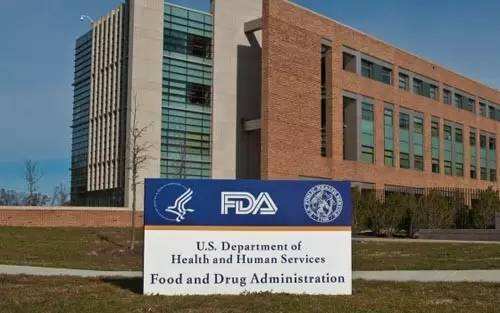
The US Food and Drug Administration (FDA) is a subsidiary of the US Department of Health, Education, and Welfare, responsible for the management of drugs, food, biological products, cosmetics, veterinary drugs, medical devices, and diagnostic supplies nationwide.The US FDA certification has a huge impact in the United States and even globally, and is known as the guardian of American health. Drug and food manufacturers around the world love and fear it, and the credibility and professional level of FDA certification in the United States have earned the trust of many experts and the public. Its strict testing and evaluation have not only provided good protection, but also sparked criticism from many pharmaceutical and food companies, accusing it of restricting invention and innovation, and being the biggest obstacle to the public's access to specific drugs, and lobbying Congress to reduce the FDA's authority.There is no certificate for FDA certification registration in the United States. Products registered with the FDA will obtain a registration number, and the FDA will provide the applicant with a reply letter (signed by the FDA Chief Executive), but there is no mention of an FDA certificate. Chinese applicants must appoint a US citizen (company/association) as their agent when registering with the FDA. The agent is responsible for providing process services located in the United States and serves as a medium to contact the FDA and the applicant.The US FDA certification is a law enforcement agency, not a service agency. If someone claims to be a certified laboratory under the FDA, then they are at least misleading consumers because the FDA does not have a service-oriented certification agency or laboratory for the public, nor does it have a so-called "designated laboratory". As a federal law enforcement agency, the FDA cannot engage in activities that involve both serving as a judge and an athlete. The FDA will only recognize the GMP quality of service testing laboratories and issue certificates of conformity to those that meet the standards, but will not "designate" or recommend specific one or several to the public.

Learn More +
Consult

Phone

Head Office

0755-27391220

Guangzhou Company

020-82513196

WeChat

Qrcode

WeChat customer service

Qrcode

Mini Program

Email

Enterprise Email

reanny@reanny.com